ALL FEATURES | ALL FULL ISSUES | ISSUE 26
Originally published on October 4, 2026 in issue 26 of Forward Weekly
Decades ago, while standing in a 7-Eleven checkout line, I heard a man behind me chirp: “You're what my taxes pay for? Give me a break.” Only two of us were in line. He was talking to me. I turned around to square up. I saw a worn-out man in a tired ball cap looking for someone to scapegoat.
This wasn’t a one-time outburst; I’ve been on the receiving end of this entrenched habit of “blame the Indians” all my life, and I was reminded of it again recently when I saw that same resentment make the national news.
This summer, someone hung a banner on a Spruce Grove fence, 11 kilometres west of Edmonton: The Indians have done nothing for 100 years, and now they want to tell us how to run Alberta.
Across Canada, and in Alberta particularly, anti-Indigenous rhetoric is growing. We’ve seen this play before. History has shown that public prejudice and aggression often mirror economic anxiety. It usually unfolds in three acts.
When the Alberta Advantage slows, Indigenous rights are blamed for causing problems.
Act 1: The Squeeze
Yes, even here in Canada’s energy engine, grocery and utility bills are rising, fuel costs keep climbing, and the Alberta Advantage is stuttering. People’s frustration looks for someone to blame. Biased talk targets “the Indians.” We heard it during the mid-’80s bust, after the 2014 oil crash, and we are living it now. When the Alberta Advantage slows, Indigenous rights are blamed for causing problems.
Act 2: Flipping the Script
Court-affirmed land rights and treaty protections are reframed and weaponized. Back in 2020, across Canada, railways were blocked in support of Wet’suwet’en Hereditary Chiefs. Here in Alberta, the province responded with laws that criminalized protest, casting treaty rights as problems for business.
We saw this play out again in May, when the Athabasca Chipewyan First Nation and Blackfoot Confederacy successfully challenged a proposed Alberta-separation referendum process. They asserted their constitutional rights protected under Treaties 6, 7 and 8 and the Court of the King’s Bench agreed, finding that the province had failed in its duty to consult. Then, rather than engaging with constitutional reality, commentators branded the decisions “anti-democratic” and claimed Indigenous rights amount to an illegitimate veto over Alberta’s future.
When people worry about mortgages and businesses, treaty rights become an easy target. Rather than confronting the global economic forces driving the squeeze, critics cast treaty rights as an unfair privilege.
This act always ends the same way: Indigenous leaders are told to “check themselves.”
When people worry about mortgages and businesses, treaty rights become an easy target. Rather than confronting the global economic forces driving the squeeze, critics cast treaty rights as an unfair privilege. They ignore what Treaties 6, 7 and 8 actually are. One hundred and fifty years ago, over 100 Indigenous leaders negotiated mutual agreements with the Crown, under which First Nations agreed to share the land for settlement and, in return, were guaranteed reserved lands, health care, education and the right to hunt and live our lives freely. Framing these agreements as charity perpetuates a false zero-sum myth: that honouring Indigenous rights puts everyone else’s income at risk.
Which brings me back to that banner outside in Spruce Grove. More than a cultural flashpoint, it’s a banner of financial insecurity, weaponized into political resentment. It’s the sound of eroding entitlements enjoyed by settlers for more than a century.
Act 3: The Revision
Scapegoating depends on an alternate version of history. Slurs like the banner on that Alberta fence rely on fiction: that First Nations spent a century sitting on our hands, waiting for charity. That isn’t an “alternative perspective”; it is a lie designed to flatter settler entitlement. It ignores 150 years of forced economic sequestration, stolen land and government-enforced barriers designed to lock Indigenous people out of prosperity. The poverty was not accidental. It was by design. It was created to keep Indigenous people off their land and out of the economy so Alberta could become wealthy at our expense.
And here we are: history revises, then repeats. Fade to black. Roll the credits.
But there might be a fourth act waiting after the scroll, if you stick around for it.
Until we recognize that pushback against Indigenous rights rises and falls with economic instability, we’ll keep mistaking systemic fear for simple disagreements over politics.
Act 4: Squaring Up
If we want to decolonize, we, the First Nations, need to square up and be economically sovereign. We need to continue affirming our constitutional right to make our own financial decisions. We need to drive generational wealth.
And all Albertans need to uphold our respective sides of our treaty agreement. We need to acknowledge 150 years of our shared history.
If we treat this hostility as a debate over identity, we miss the engine driving it. Until we recognize that pushback against Indigenous rights rises and falls with economic instability, we’ll keep mistaking systemic fear for simple disagreements over politics.
We’re smarter and more courageous than racism. We need to challenge our status quo.
Thinking back to that man in the 7-Eleven checkout, I wish I’d turned around and said to him, “I get it. Acting angry is easy and being scared becomes a habit. So please understand, I don’t want or need your hand out, and I don’t need permission to be successful.”
ekosi.
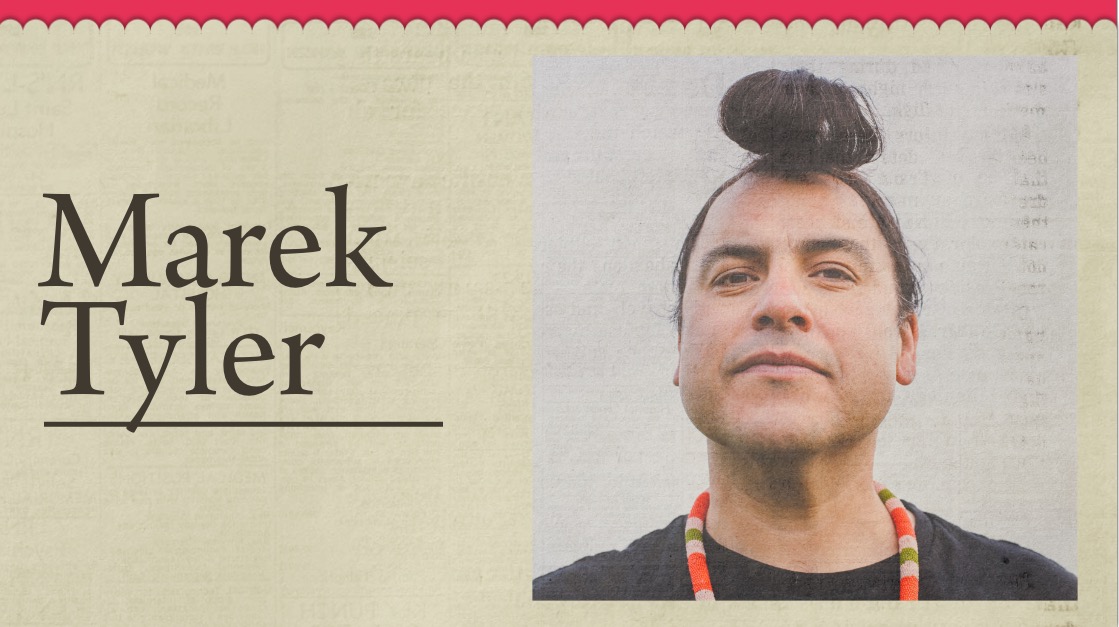
Marek Tyler is a nêhiyaw artist and musician from Treaty 6, best known as the drummer for Juno-nominated band nêhiyawak. Performing as ASKO, he creates percussion-led soundscapes rooted in nêhiyaw life and ways of living.
A note from Forward Weekly on opinion content: The opinions expressed in this feature article are solely those of the author and do not necessarily reflect the views of Forward Weekly or its publisher, editors, staff, or affiliates.