ALL FEATURES | ALL FULL ISSUES | ISSUE 13
Originally published on June 21, 2026 in issue 13 of Forward Weekly
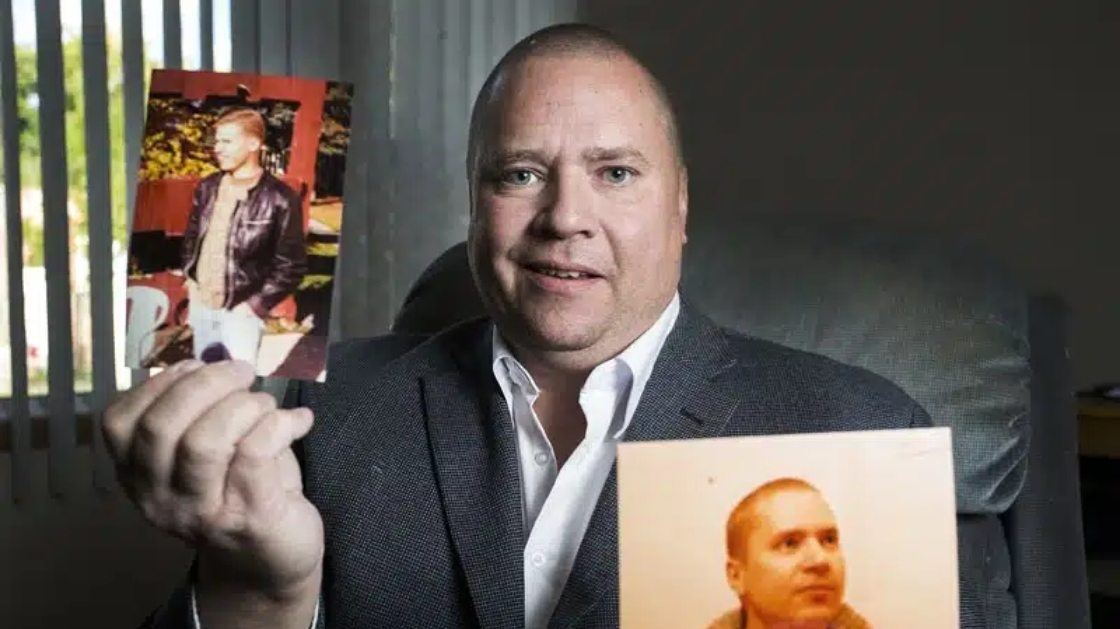
My name is Leif Gregersen. I am 54 years old. I was raised with a strong Protestant work ethic and have had many jobs in my life, from picking beans on Lois Hole’s farm to working as a security guard on the set of Christmas in Wonderland. I also live with a combination of symptoms of schizophrenia and bipolar disorder, which make it hard for me to support myself exclusively through the work that I do — a fact that I’m deeply ashamed of. There have been times when I’ve felt like a drain on society.
I’ve felt better in the past few years because I now dedicate my time to educating and supporting others affected by mental illness. The work is meaningful, and the flexible schedule actually helps me stay employed. If I worked a regular, full-time job — especially in an entry-level position that involved heavy, repetitive manual labour — I would be a complete wreck within weeks of starting. (My schizophrenia alone can be debilitating, but the side effects of medication and chronic health issues like arthritis, high blood pressure and type 2 diabetes, make full-time work even harder to sustain.)
My job helps me earn a living, but it’s not enough to survive. When I’m stable enough to work, I can expect one or two shifts a week, each paying $15 an hour for three hours. I never earn more than $3,500 a year from my job. So, for almost 30 years, I have relied on Assured Income for the Severely Handicapped (AISH) to get by.
People with severe disabilities have been consistently funded below what’s considered “the poverty line.”
The program allows a monthly financial benefit, plus medical, dental and pharmaceutical coverage, for people who live with severe disabilities that profoundly affects their ability to work. But mental illness is not typically considered severe enough. It took me seven years from my initial diagnosis to get approved for AISH, largely because I was able to prove that I had another painful and chronic health condition.
Between AISH and Canada Pension Plan disability benefits, I receive about $1,940 a month. About $600 of that comes from CPP disability — money I earned through years of working — but every dollar is deducted from my AISH payments. Because of an old overpayment, I don’t even receive the full amount. Somehow I’ve managed to get by on $2,000 to $2,300 a month, but soon I might not be able to.
Next month, the Alberta government will transition almost everyone on AISH — 79,000 people — to a new program called Alberta Disability Assistance Program (ADAP). The intention is to separate those who can still work even a small amount from those who have “profound” disabilities that make them fully unemployable.
The government says ADAP was created in discussion with AISH recipients. Given the outcry from disabled community members, it’s unclear which of them would ever agree to these changes — which includes receiving $200 less starting December 2027 and having to prove they’re actively seeking work in order to receive benefits.
Since the program began, in 1979, AISH has gone through several roller-coaster changes, depending on which premier was in control. In 2012, Alison Redford increased benefits previously set at $1,180 by $400 a month. A few years later, Rachel Notley had AISH indexed to the cost of living, raising benefits to $1,685. Jason Kenney took away that aspect of the program three years later. It was announced to be reinstated in 2022 by Danielle Smith, but by the time the policy came into effect, critics felt it was too little, too late. By then, inflation had risen by over 13 percent, totalling adjusted individual losses of $12,000 over the years — a life-changing amount for many in the disabled community.
It’s important to note that, throughout all these changes, people with severe disabilities have been consistently funded below what’s considered “the poverty line.” What’s more, the program has always included a complex application process requiring many professional assessments and a lot of paperwork. I have never known or heard of a case of someone getting on AISH easily.
The UCP government claims they’re streamlining the disability assistance programs, making it easier for people to apply for disability support. Another stated goal is to encourage participation in the workforce with a host of employment supports — one-on-one, “wrap-around services” like access to career planning and training — for which they’ve committed $250 million. To anyone who takes pride in working as much as they are able, these would be reasons to celebrate.
If I am lucky, I’ll adjust to the changes imposed by ADAP, though I may need to sell my car, cut back on comforts and rely on the food bank.
This assumes that disability follows a simple path back into the workforce. But when your disabilities already limit how much you can work — and what kind of work you can sustain — increased pressure to participate in the workforce can feel less like support and more like punishment.
There are other concerns in the community. We’re worried about how much paperwork will be involved in ADAP, how the program will be executed, and what new and ongoing professional assessments will be required to remain a recipient. For example, my colleague was notified he was being transferred to ADAP but not informed who to give his employment records. Despite several hours spent on the phone and online trying to answer it himself, he still doesn’t know.
The reality is this: ADAP’s maximum allowance of $20,880 is still below the “deep poverty” lines of Alberta’s two biggest cities and barely above the threshold for rural Alberta. That in itself shows how low the government has set the bar for what it considers adequate support.
The expected reductions in income come hard on the heels of two other recent changes that have disproportionately affected members of the disabled community.
The first, a UCP policy that went into effect last October, increased rent for subsidized housing tenants — 16 percent of whom were on AISH — by $220 a month. The second took effect in October of 2025, when Alberta became the only province to offset a $200 Canada Disability Benefit by reducing AISH benefits by the same amount. This money was specifically intended to address the growing problem of disabled people living in poverty.
The motives for these cutbacks are unclear — and unimportant to me. What matters is that they’ve made it incredibly difficult for people like me to pay bills, pay rent, pay for groceries and manage my serious mental illness with a modicum of human dignity.
If I am lucky, I’ll adjust to the changes imposed by ADAP, though I may need to sell my car, cut back on comforts and rely on the food bank. Others will not be so lucky. I’m left wondering: How can anyone justify austerity measures for people already living in poverty as economically viable or humane? But those measures are here, and few beyond those affected by them seem to care.
Leif Gregersen is a writer and public speaker with a passion for helping people with mental illness and their loved ones live their best lives. He writes at leifgregersen.substack.com.
A note from Forward Weekly on opinion content: The opinions expressed in this feature article are solely those of the author and do not necessarily reflect the views of Forward Weekly or its publisher, editors, staff, or affiliates.