ALL FEATURES | ALL FULL ISSUES | ISSUE 20
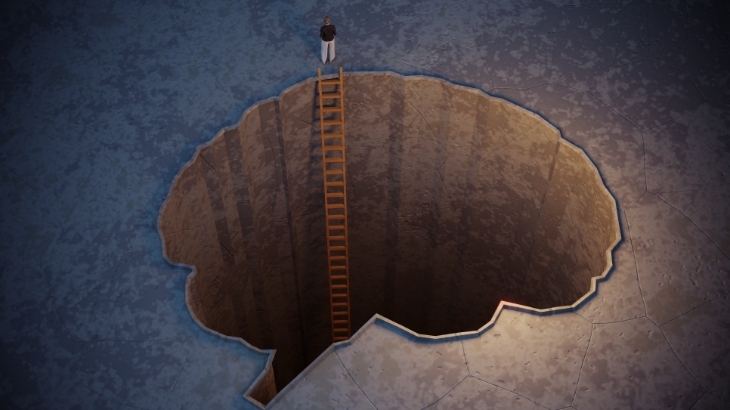
Credit: iStock/Eoneren
Originally published on August 23, 2026 in issue 20 of Forward Weekly
I laid in bed, paralyzed and trying desperately to rest, in a cluttered, filthy, one-room apartment. The only window was frozen shut. Thick cigarette smoke had left a brown, greasy residue on the walls. In a documentary about a man with a mental illness like mine, I had once heard the words, “You will die in a one-room apartment.” Now they came back to me.
I tried to kick myself awake from what I hoped was a nightmare, but the reality was much worse — heavily medicated and sleeping most of my days away.
Years would pass before I could honestly call my accommodations a home, and before I could call myself recovered. In the end, what made recovery possible was not shelter alone. I needed a place to live and a community to belong to.
Public debate about homelessness and mental illness often focuses on the comfort and personal safety of the people who are already housed in the neighbourhood most affected by it. The proposed answers, other than some variation of “not in my backyard,” are often institutional treatments.
My experience with schizoaffective disorder taught me that treatment matters, but treatment cannot do its work without housing, income, relationships and a reason to hope. We spend enormous resources responding to people in crisis while withholding the ordinary supports a person needs to build a stable life.
We call the combination of these policies 'a safety net,' but people in crisis are expected to find their own way across the holes they so often fall through.
Recovery doesn’t always mean a cure. It can mean building a satisfying and meaningful life while symptoms or limitations continue. My own recovery began with a moment of clarity: I had to finally accept I lived with a treatable illness. I had to recognize how my refusal to take my diagnosis seriously had damaged my relationships.
Accepting Treatment Was Just the Beginning
Psychosis can involve hallucinations, delusions and paranoia that reinforce one another. Once, the ticking of a clock seemed to turn into an obscene word. At other times I believed a movie star was my girlfriend or that another patient had put ground glass in my food. These ideas can sound bizarre from the outside. From inside psychosis, they can feel like evidence.
That’s what led me to a six-month stay in a provincial psychiatric hospital. For months I was deep in psychosis and repeatedly locked in a seclusion room with only a plastic mattress and a thick, uncomfortable blanket. I yelled and screamed, kicking the door as hour after hour went by.
This confinement was not treatment or therapy; it was punishment. The only thing giving me an imaginable future to move toward was the belief that one day this horror will end.
Back in the World
A hospital can stabilize a person, but discharge changes everything suddenly. Medications may still need adjustment. Housing or work may need to be reacquired. Friendships must be rebuilt. The supposed simplicity of recovery — treatment, medication, housing and support — is not the same as ease. Too often we wait until someone is living rough, hungry and irrational, then blame that person for failing to solve a crisis we helped create.
Medication and support groups helped with delusions, hallucinations and extreme moods. They also brought hand tremors, problems sleeping and waking, and a sense of disconnection. At 25, after repeated attempts to return to work, I pleaded with my psychiatrist to apply for Alberta’s Assured Income for the Severely Handicapped program — or AISH. I was finally approved and it became my lifeline.
Before receiving AISH, I’d spent seven years in poverty and depression, unable to buy the smallest personal item without sacrificing deodorant, laundry, a phone call or a stamp to write to my family. The benefit did not demotivate me from working. Receiving support beyond bare subsistence helped me become healthier and better equipped to find part-time work.
I’ve been on AISH for 27 years, but last month, my benefits ended and I’m now an Alberta Disability Assistance Program (ADAP) recipient, with fewer benefits and more responsibility to join the traditional workforce.
Back when my psychiatrists saw potential in me to earn a living, the question was never whether I wanted to work. It was whether suitable work existed that would not destabilize my illness.
I felt like my circumstances were understood, but now the ADAP program wants me to prove it all over again — but with a reduced income, higher rent and higher cost of living.
Looking back, it seems cruel that I spent so long without adequate income or treatment for painful osteoarthritis in my knees. All my energy went to rent, appointments, medication and trying to preserve my strained relationships. A system designed around absolute need made me deteriorate until my need was impossible to deny.
Long-Term Stability
When medication made me feel well, I convinced myself I no longer needed it or a psychiatrist. People around me watched me lose weight and decompensate, but I couldn’t see it myself. After another long hospitalization, I accepted treatment again — this time with the resources to make the decision last.
A social worker found the group-home placement that changed my life. So, this time, instead of returning to isolation, I was supported with regular meals, structured sleep and medication, trained staff and empathetic peers. I gave up some freedom and the expenses were prohibitive, but for the first time since my illness began, I belonged to a community.
I stayed for more than 15 years. The only tragedy is that so few people like me get the same opportunity.
Surviving Stigma
The shame of getting disability benefits was reinforced by people around me. Once, after I mentioned receiving disability benefits at a church gathering, a friend said, “I don’t agree with the fact that someone can just do nothing while I have to work.”
I wanted to describe the daily work of surviving schizophrenia, the threat of hospitalization if I’m destabilized. If I were in a wheelchair, I doubt they would have described my support as laziness. But because my disability is invisible, my reliance on benefits was treated as a moral failure. So I said nothing.
Psychiatry, medication and therapy matter. But none can work reliably without a stable home, regular meals and sleep, a dignified income and a community that’s rooting for you to have a better future.
How can you explain living with a mental illness to someone who has never had to? Even personal experience does not automatically overcome the belief that severe mental illness is a choice.
Once, during a two-month hospitalization for crippling depression, another longtime friend said, “Oh, that’s convenient. Maybe I should just decide I can’t handle life and go into a psychiatric hospital.” I had once feared for this person’s safety during his own depression.
I was ashamed to be unemployed, yet the work available to me could destroy my mental and physical health. I worked on and off as a security guard, and while the quiet gave me time to read, the overnight shifts disrupted my sleep and medication schedule — two foundations of stability. Sometimes, after days without sleeping, I’d have to quit. Other times, I was fired.
The Safety Net Holes
Stigma is more than social. It is political, written into disconnected policies: disability benefits that punish employment, affordable housing far from services and mental-health care that treats symptoms but not poverty — leaving income, food and belonging to other ministries. We call the combination of these policies “a safety net,” but people in crisis are expected to find their own way across the holes they so often fall through.
Programs can be designed differently. Vocational rehabilitation can support both workers with mental illness and their employers. Housing First programs provide a home immediately, paired with ongoing support, rather than making housing a reward for recovery. Both approaches recognize that stability is the starting point, not the prize at the end.
This matters because the fragmented system creates false economies. A cheap room far from services can leave someone isolated and deteriorating. A disability benefit kept below the cost of living can make it impossible to eat well, travel to appointments or participate in community. Cutting a vocational program may save one budget line while increasing pressure on hospitals, shelters, police and families. The public still pays — often more — after the person has paid first in lost health and lost years.
What a Proper Second Chance Looks Like
Today, the 10-by-15-foot apartment is behind me. After the group home helped me function independently, I pursued work and education that could lift me out of punishing, low-wage labour. I began to write and later to teach wellness and creative-writing classes. I was once broken and stigmatized; with sustained support and effort, I became a functioning, caring and cared-for person.
At my group home, I found the Schizophrenia Society of Alberta. It trained me in recovery, hired me as a community educator and peer-support worker, and helped me turn painful experiences into useful work. Along with freelance writing, those roles allowed me to fight stigma rather than simply endure it.
I learned that recovery also requires at least one person who stays on your side: someone who can advocate and remind you of your own strengths and see beyond your past mistakes. Chronic mental illness is something you can recover from, but recovery cannot rest on willpower alone. Psychiatry, medication and therapy matter. But none can work reliably without a stable home, regular meals and sleep, a dignified income and a community that’s rooting for you to have a better future.
We can continue paying for hospital beds, police responses and repeated crises, or we can provide those foundations before desperation becomes the price of admission. A second chance begins when policy treats a person with mental illness not as a problem to contain, but as a citizen whose life can still expand.
Leif Gregersen is a writer and public speaker with a passion for helping people with mental illness and their loved ones live their best lives. He writes at leifgregersen.substack.com.
Dr. Holly Symonds-Brown is an assistant professor in the Faculty of Nursing at the University of Alberta. As a qualitative researcher, she focuses on improving quality of life for people who are marginalized due to cognitive or mental health differences.
A note from Forward Weekly on opinion content: The opinions expressed in this feature article are solely those of the author and do not necessarily reflect the views of Forward Weekly or its publisher, editors, staff, or affiliates.